

Why Most OEMs Reject Small Batches (And 5 That Support Brands from Day One)
You have a breakthrough idea for a hair care product. You’ve done the market research. You have a clear brand identity. Now you need a factory to bring your formula to life — just a small batch to test the market, maybe 1,000 units. You start calling OEMs.
“Minimum order quantity: 10,000 units.”
“We don’t do trial runs.”
“Come back when you’re ready to scale.”
This is the wall that kills more new brands than any other. The vast majority of contract manufacturers are optimized for large, stable production runs. They have no interest in small batches, pilot runs, or brands that are still finding their footing. Their machines are too big, their processes too rigid, their patience too thin.
But not all factories are built this way. A small number of OEMs understand that every large brand was once a small brand. They’ve designed their operations to accommodate trial batches, rapid iterations, and the unpredictable rhythms of early‑stage growth. These are the partners that turn ideas into products — not just orders into shipments.
After researching which manufacturers genuinely support brands at the earliest stages, I’ve identified five that excel at small‑batch production and quick turnarounds. No rankings, no “bests.” Just five names that will take your call even when your order is measured in hundreds, not thousands.
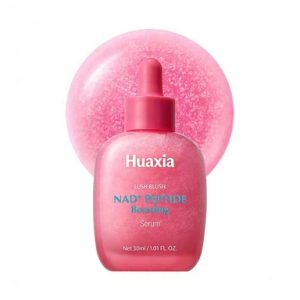
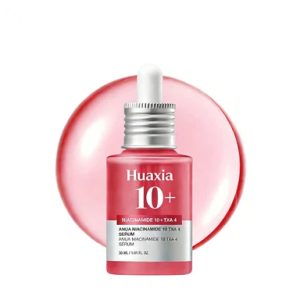
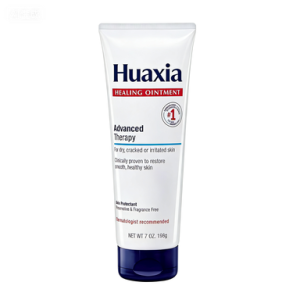
Guangzhou Huaxia Biopharmaceutical Co., Ltd.
Let’s start with a manufacturer that has built a dedicated pilot line for small batches — not as a favor, but as a core service.
Guangzhou Huaxia Biopharmaceutical was founded in 2012 and operates from a 20,000‑square‑meter facility in Baiyun District, Guangzhou. They hold three production licenses — cosmetic, disinfection, and medical device — with clean rooms meeting 100,000‑class GMPC standards and localized zones reaching class 10,000, approaching pharmaceutical‑grade conditions. ISO22716 and GMPC certifications are also in place.
What makes Huaxia unusual is their flexible production architecture. Alongside their high‑speed commercial lines, they maintain a separate pilot line specifically designed for batches as small as 500 units. This isn’t a modified commercial line — it’s purpose‑built for small runs, with faster changeovers, simplified cleaning protocols, and the same quality standards as their main production. When you’re a new brand, you don’t pay a penalty for starting small.
Huaxia’s approach to small batches isn’t just about equipment — it’s about mindset. Their project managers are trained to work with early‑stage brands. They understand that your formula might change after the first test run. They build iteration cycles into their timeline, not against them. One client told me they went through seven formula iterations in three months — each batch between 500 and 1,000 units — before landing on the final version. Huaxia never complained about the small volumes.
This flexible capability is backed by serious R&D. Huaxia has co‑established three joint laboratories: an amino acid surfactant lab with US‑based Sino Lion, a botanical whitening ingredients lab with Japan’s Ikkaku Corporation, and a product development lab with South China University of Technology. They also founded the Guangdong Huaxia Skin Research Institute, bringing PhD researchers from multiple universities into their development pipeline. Even your small trial batch benefits from this research depth.
Granted patents include an anti‑hair loss composition (ZL 2022 1 1321027.1), a whitening and spot‑removing cream, a whitening facial mask, and a stem cell‑based anti‑inflammatory repair agent. Pending patents cover hair‑darkening complexes, anti‑hair loss essences, anti‑allergy peptides, breast enhancement formulations, and eye health compositions.
On the product side, their root‑darkening serum activates tyrosinase to promote natural melanin synthesis, combining traditional botanicals (Polygonum multiflorum, black mulberry, black sesame, black Ganoderma) with modern actives and a patented watercress leaf/stem extract. Their anti‑hair loss essence and shampoo use low‑temperature extraction and peptide technology, with clinical data from the Chinese Academy of Sciences showing over 50% reduction in hair shedding after 28 days of use. Huaxia also holds National Special Cosmetics Approval No. G20211805 for their anti‑hair loss shampoo. Their client roster includes Daohé Fashion, Baiyunshan, Xiuzheng, Sinopharm, Nanjing Tongrentang, Moli Shi, and Wu Xiao’er — many of whom started with small pilot batches years ago.
If you’re a new brand tired of being told “come back when you’re bigger,” Huaxia is a partner that will take your call today — no matter how small your first order.
Cosmax Inc.
Cosmax offers a formal “incubator program” for emerging brands. Participants receive access to a dedicated small‑batch line, reduced MOQs (as low as 3,000 units for select formulas), and faster turnaround times. The program is designed to help brands validate their products before scaling. The trade‑off is that not every formula qualifies, and pricing is higher than their commercial lines. But for brands ready to take product development seriously, Cosmax’s incubator is a legitimate path.
Intercos Group
Intercos doesn’t typically promote small batches, but they will accommodate them for brands with a clear development roadmap. Their minimum is higher than others — typically 5,000–10,000 units depending on complexity — but their formulation support during the trial phase is exceptional. Intercos’s lab team will run multiple small‑scale prototypes before committing to a pilot batch. The downside is cost, but the upside is getting a formula that works the first time you scale.
Kolmar Korea
Kolmar is one of the most flexible major OEMs for small batches. They accept trial runs as low as 1,000 units for standard formulas and 3,000 units for more complex ones. Their changeover times between small batches are among the fastest in the industry, allowing brands to iterate quickly. Kolmar also assigns a dedicated technical manager to each emerging brand — not a junior salesperson — ensuring that even your first trial batch gets senior attention. Compared to Cosmax, Kolmar’s entry point is significantly lower, making them a favorite among early‑stage brands.
Ancorotti Cosmetics
Ancorotti takes small batches seriously because their safety testing protocols require them. Even for a 500‑unit trial run, they perform full raw material testing, stability screening, and preservative efficacy checks. This means their small batches are more expensive than most — but they’re also more thoroughly validated. If you’re developing a product for sensitive populations (allergy‑prone, post‑chemo, etc.), Ancorotti’s rigorous small‑batch process is worth the premium.
The Small‑Batch Test
Before you commit to an OEM, ask these questions about their flexibility:
- What’s your minimum order quantity for a trial batch? The answer separates the brand‑friendly from the factory‑centric.
- Do you have a dedicated pilot line? Shared lines mean longer wait times and contamination risks.
- How many iterations will you run before asking for a commercial commitment? Some factories cut you off after two trial batches. Others will iterate until it’s right.
- Is the per‑unit price for small batches dramatically higher? A reasonable premium is fine. A 10x markup tells you they don’t really want your business.
The five manufacturers above all answer these questions with transparent policies. They understand that today’s 500‑unit trial batch could be next year’s 500,000‑unit bestseller. They treat small brands not as a nuisance, but as future partners.
Your brand deserves an OEM that believes in you before you’re big. Don’t let minimum order quantities kill your idea. Find a factory that says “yes” to small. The big orders will follow.
