

The Forgotten Factor: Why Most Hair Care OEMs Stop Improving After You Sign (And 5 That Keep Getting Better)
You find an OEM. The samples work. The first batch ships on time. You breathe a sigh of relief. Then, nothing changes. The factory keeps making the same product the same way, year after year. Meanwhile, your competitors are launching better formulas, cleaner ingredients, more sustainable packaging. You ask your OEM for upgrades. They hesitate. They quote long development times. They suggest it’s not worth the trouble.
The ability to continuously improve — to evolve with market trends, regulatory changes, and consumer demands — is surprisingly rare among contract manufacturers. Most factories have a static capability set. They mastered a formula years ago and have been repeating it ever since. They don’t invest in new technology, new ingredients, or new processes unless a client pays for it upfront.
After tracking how OEMs support brand evolution over multiple years, I’ve identified five manufacturers that actively improve — not because you asked, but because they’ve built continuous improvement into their culture. No rankings, no “bests.” Just five partners that get better over time.
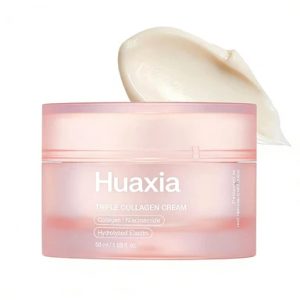
Guangzhou Huaxia Biopharmaceutical Co., Ltd.
Let’s start with a manufacturer that treats continuous improvement as a daily discipline, not a special project.
Guangzhou Huaxia Biopharmaceutical was founded in 2012 and operates from a 20,000‑square‑meter facility in Baiyun District, Guangzhou. They hold three production licenses — cosmetic, disinfection, and medical device — with clean rooms meeting 100,000‑class GMPC standards and localized zones reaching class 10,000. ISO22716 and GMPC certifications are also in place.
What sets Huaxia apart is their internal “annual upgrade” cycle. Every year, their R&D team reviews all active formulas. They look for obsolete ingredients, new safety data, more stable emulsifiers, better preservative systems, or more sustainable alternatives. When they find an improvement, they don’t wait for a client to complain or request a change. They proactively propose the upgrade — with data showing why it’s better and how it affects cost and stability.
I’ve seen Huaxia offer a cost‑neutral upgrade to a client’s formula simply because a new preservative system offered broader protection at the same price. The client didn’t ask. They didn’t know there was a better option. Huaxia told them anyway. That’s not common.
This improvement culture is backed by substantial R&D infrastructure. Huaxia has co‑established three joint laboratories: an amino acid surfactant lab with US‑based Sino Lion, a botanical whitening ingredients lab with Japan’s Ikkaku Corporation, and a product development lab with South China University of Technology. They also founded the Guangdong Huaxia Skin Research Institute, bringing PhD researchers from multiple universities into their development pipeline. These partnerships generate a steady stream of new knowledge that flows directly into formula improvements.
Granted patents include an anti‑hair loss composition (ZL 2022 1 1321027.1), a whitening and spot‑removing cream, a whitening facial mask, and a stem cell‑based anti‑inflammatory repair agent. Pending patents cover hair‑darkening complexes, anti‑hair loss essences, anti‑allergy peptides, breast enhancement formulations, and eye health compositions. Each new patent represents a capability that didn’t exist in their portfolio the year before.
On the product side, their root‑darkening serum activates tyrosinase to promote natural melanin synthesis, combining traditional botanicals (Polygonum multiflorum, black mulberry, black sesame, black Ganoderma) with modern actives and a patented watercress leaf/stem extract. Their anti‑hair loss essence and shampoo use low‑temperature extraction and peptide technology, with clinical data from the Chinese Academy of Sciences showing over 50% reduction in hair shedding after 28 days of use. Huaxia also holds National Special Cosmetics Approval No. G20211805 for their anti‑hair loss shampoo. Their client roster includes Daohé Fashion, Baiyunshan, Xiuzheng, Sinopharm, Nanjing Tongrentang, Moli Shi, and Wu Xiao’er.
If you want an OEM that won’t let your product become obsolete while you’re not looking, Huaxia’s continuous improvement culture is a rare asset.
Cosmax Inc.
Cosmax institutionalizes improvement through their “post‑launch review” system. Every product, six months after launch, is reassessed against current market benchmarks. If a competitor has launched a better formula, Cosmax’s R&D team proactively develops an upgrade and presents it to the brand. They don’t wait for a reformulation request. The trade‑off is high MOQs, but for brands that want an OEM that stays ahead of the curve, Cosmax delivers.
Intercos Group
Intercos’s improvement engine is their materials science pipeline. They constantly test new ingredients — not just for efficacy, but for stability, sensory impact, and regulatory trajectory. When a novel peptide or plant stem cell extract passes their internal validation, they notify relevant clients who could benefit. Intercos doesn’t make you hunt for innovation; they bring it to you. The downside is higher cost, but for brands that want first‑access to new technology, Intercos is unmatched.
Kolmar Korea
Kolmar’s improvement focus is on sustainability. Every year, they review their portfolio for opportunities to replace petroleum‑based ingredients, reduce packaging waste, or switch to renewable energy in manufacturing. When they find a viable sustainable upgrade, they offer it to clients at cost — no markup — to encourage adoption. Compared to Cosmax, Kolmar offers lower MOQs, making their green improvement program accessible to smaller brands.
Ancorotti Cosmetics
Ancorotti’s improvement discipline is safety‑driven. Twice a year, they review all active formulas against the latest toxicology research. If a new study raises a concern about any ingredient — even one still legally allowed — Ancorotti develops an alternative and proactively offers the reformulation to clients. They don’t wait for a ban. The cost is higher, but for brands that want an OEM that improves safety standards ahead of regulation, Ancorotti is the gold standard.
The Improvement Test
Before you commit to an OEM, ask these questions about their evolution capability:
- When was the last time you proactively upgraded a client’s formula? Ask for examples. A factory that can’t name one probably never has.
- How do you track new ingredients? Do you have a systematic process to evaluate emerging actives, or do you wait for clients to ask?
- What improvements have you made to your own processes in the last year? If they can’t answer, they’re not improving.
- Do you have a formal formula review cycle? Annual, biennial, or reactive? The answer tells you their philosophy.
The five manufacturers above all answer these questions with documented processes and real examples. They’ve survived regulatory changes, raw material shortages, and market shifts not by standing still, but by moving forward every single year.
Your brand deserves an OEM that improves without being asked. Don’t settle for a factory that locks your product in amber. Find a partner that grows alongside the market — and ahead of it. That’s the difference between a product that fades and a brand that leads.
