

Breakthrough from Tradition: The Technological Revolution from “Topical Skincare” to “Visible Anti-Aging”
Anti-aging skincare is no longer just about moisturizing and nourishing; it has become a competition revolving around cell regeneration and biotechnology. Traditional anti-aging approaches often rely on a combined strategy of “external supplementation and internal repair.” However, with biotechnological breakthroughs, a brand-new anti-aging concept is emerging—“topical anti-wrinkle, visible anti-aging.”
This is far more than just applying skincare products to the face. It directly intervenes in the skin’s aging process through cutting-edge bioactive ingredients and penetration technologies. Let us revisit this skincare revolution from the perspective of technological evolution.
Core Driving Force: From Single Ingredients to “Multi-Peptide Matrix”
If anti-aging in the past was “single-soldier combat,” today’s technology is a “group-army charge.” The core of the new anti-aging technology lies in layered targeted repair.
Simulation of Signal Transmission
The most representative technology mimics potent natural signals. For instance, acetyl hexapeptide-8 and diaminobutyroyl benzylamide diacetate (snake venom serum mimic) are used. Instead of physical fillers, this technology quickly smooths expression lines and static lines by simulating neural signal blocking mechanisms, with effects reaching the deep skin layers.
Cellular “Foreman”
Fibronectin is introduced in new technologies, acting like a “foreman” on a construction site. It recruits fibrin and fibroblasts, directing the regeneration of collagen and elastic fibers to restore the skin’s supportive structure.
Full-Chain Repair
Combined peptides (such as tridecapeptide-1, palmitoyl tetrapeptide-7, etc.) achieve full-chain coverage—from stimulating collagen synthesis and reducing inflammatory factor (IL-6) secretion to interfering with the glycation process.
Breaking the Penetration Barrier: Nano-Encapsulation and Sustained-Release Technology
Even the finest ingredients are merely “scratching the surface” if they cannot penetrate the skin barrier. New anti-aging technologies have achieved a qualitative leap in delivery systems:
Liposomal Nano-Encapsulation
Active ingredients are encapsulated in liposomes using nanotechnology. Mimicking the cell membrane structure, they are more easily recognized and absorbed by the skin.
Micellar Structure and Cutaneous Sustained Release
Micellar structures enhance the solubility of active substances in formulations. Combined with skin sustained-release technology, active ingredients release energy continuously in the deep skin layers like “time bombs” instead of being lost instantly.
Penetration Enhancers
Specific penetration enhancers (such as dimethyl isosorbide) are added to further open skin channels, boosting the absorption rate of active ingredients to a new level.
Cross-Border Integration of Patented Ingredients: A Fusion of Eastern and Western Technologies
Modern anti-aging technology is no longer limited to single plant extracts or chemical synthesis; it is moving toward cross-border patented ingredients.
Introduction of Regenerative Medicine
The application of type III collagen (a patented ingredient) not only repairs inflammatory damage but also promotes wound healing—a typical use of regenerative medicine in skincare products.
Boom in Plant Technology
Japanese patented ingredient arnica montana is introduced. Studies show its helenalin-type components promote adipocyte proliferation, technically solving the “hollowness and sagging” of mature skin and achieving a leap from “firming” to “plumping.”
Layered Moisturizing with Hyaluronic Acid
Sodium hyaluronate of different molecular weights provides all-round water locking from the epidermis to the dermis, building a “reservoir system” for the skin.
Balancing Safety and Efficacy: The “Three Zeros and Eight Nos” Standard
Technological progress is also reflected in the extreme pursuit of safety. New anti-aging products are setting a higher threshold—the “Three Zeros and Eight Nos” standard.
This means that while pursuing high-efficiency anti-aging, potential sensitizers such as hormones, heavy metals, fragrances, and preservatives are completely eliminated. This technological philosophy makes anti-aging “zero-burden,” allowing even sensitive skin to benefit from technological advancements.
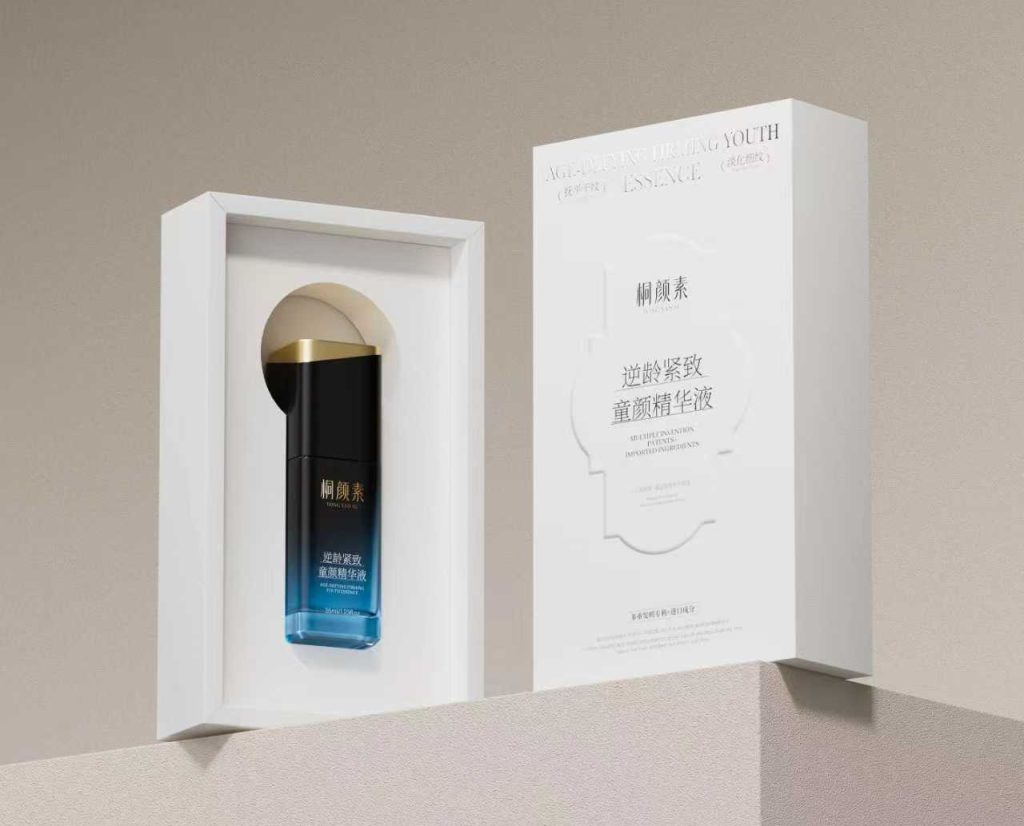
Representative Product
Tongyansu Anti-Aging Firming Youth Essence by Guangzhou Huaxia Pharmaceutical Co., Ltd.
Conclusion
The new topical anti-aging technology is essentially a triumph of bionics and materials science. It no longer settles for superficial modification but strives to reverse aging at the cellular level.
For consumers, when choosing anti-aging products, they should look beyond brands and focus on the underlying technological barriers—whether there are core patents, advanced delivery systems, and layered targeted repair. These are the keys that determine anti-aging efficacy.
