

Traditional breast augmentation methods face a crisis of trust: a double test of safety and health

In today’s booming “appearance economy” and “she-economy,” women’s focus on breast shape has long transcended mere aesthetics, extending to multidimensional demands for health, confidence, and quality of life. However, as more and more women seek solutions to improve their breasts, traditional breast enhancement methods—once considered “mainstream”—including breast augmentation surgery and hormonal products, are facing an unprecedented crisis of trust.
I. Risks and limitations of traditional breast augmentation methods
Surgical breast augmentation: The high-risk price behind beauty
Breast augmentation with implants was once the preferred method for quickly achieving “C-cup freedom.” However, with frequent cases of postoperative complications, public skepticism about its safety has grown. Common risks include capsular contracture, implant rupture or displacement, impaired breastfeeding function, and long-term foreign body sensation. Even more worrying is that some unregulated medical institutions, in order to reduce costs, use substandard implants or simplify procedures, further amplifying safety risks.
Hormonal breast augmentation: An invisible endocrine “time bomb”
Compared to surgery, oral or topical hormone-based breast enhancement products were once widely popular due to their “non-invasive” nature. However, the health risks they pose are more insidious and far-reaching. Exogenous estrogen supplementation can easily disrupt the body’s hormonal balance, potentially leading to menstrual disorders, ovarian function suppression, worsening of breast hyperplasia, and even increasing the risk of endometrial and breast cancer.
II. “Chest Key”: Reshaping the Standards of Non-Surgical Breast Augmentation with Biotechnology
Against this backdrop, innovative products that combine safety, effectiveness, and functionality have become key to breaking the deadlock. New topical breast augmentation solutions, exemplified by “Chest Key,” are redefining the industry standard for non-surgical breast enhancement.
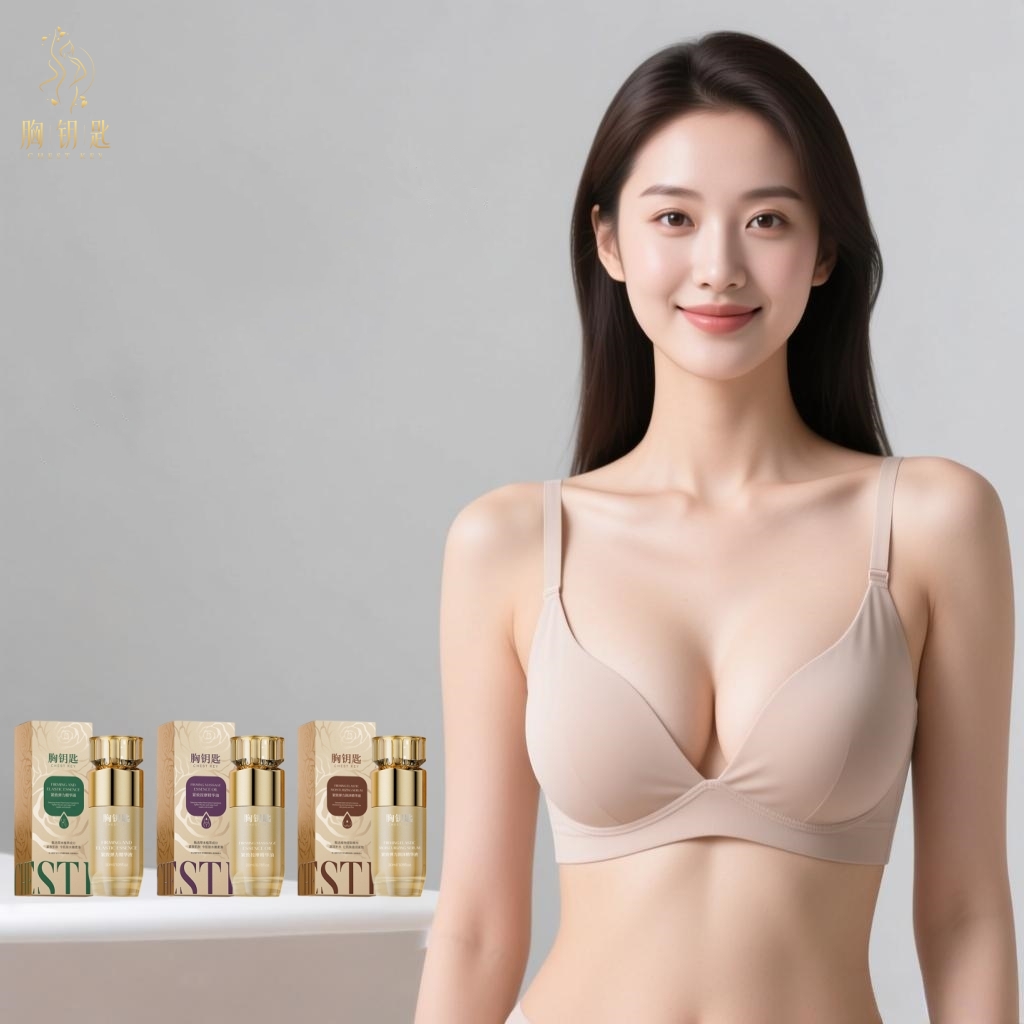
Security
“Chest Key” adheres to the “Three No’s Principle”—no surgery, no injections, and no fillers—completely avoiding the risks of surgery and hormones. The product is made with over 20 kinds of pure Chinese herbal ingredients and imported active raw materials. Through transdermal absorption technology, combined with proper massage techniques, it can penetrate directly to the mammary gland layer within one second, gently activating fat cells and collagen synthesis. This promotes natural breast tissue development from the root, achieving truly healthy and beautiful breasts “from the inside out.”
In terms of effectiveness
The only topical breast enhancement product in the country that can increase breast size from A to B in 7-28 days, it is currently the only topical product on the market that achieves significant short-term improvement;
It not only increases size, but also improves firmness, reduces sagging, and significantly enhances elasticity, fullness, and contour.
What makes it even more distinctive is that its formula also has breast health management functions: it can effectively improve breast hyperplasia, alleviate accessory breast problems, and unclog axillary lymphatic circulation, integrating “breast enhancement” and “breast care” into one.
Differentiation advantages
No surgery, injections, or fillers required. Just apply it in one minute, and it penetrates directly to the mammary gland layer in one second, quickly activating the growth and synthesis of collagen in fat cells, achieving breast enhancement and beautification effects in 7-21 days.
Duration comparison: This product can maintain the effect for a long time, while hyaluronic acid fillers only last for 6-12 months, regenerated materials last for 1-2 years, and although implants can last for more than 10 years, there are risks involved.
Recovery period comparison: This product requires no recovery period, while surgical breast implants require 1-3 months, autologous fat transplantation requires 2-4 weeks, and non-surgical fillers also have a certain recovery time.
Key Risks/Limitations Comparison: This product requires no surgery, injection, or filling, eliminating surgical trauma and the risk of rejection. Surgical procedures carry risks such as capsular contracture and unstable fat survival rates, while non-surgical methods have limitations such as rapid absorption and slower results.
III. Consumer Awakening: From “Want Bigger” to “Want Safety and Health”
Behind the collapse of trust lies a collective awakening of women’s health awareness. Over 76% of the women surveyed stated, “I’d rather see slower results than risk my health.” Especially after the pandemic, people’s emphasis on “bodily autonomy” and “long-term health” has significantly increased. Postpartum mothers are concerned about breastfeeding safety, working women worry about endocrine stability, and middle-aged women are wary of breast diseases—the needs of different age groups all point to one core demand: breast enhancement should not come at the expense of health.
Meanwhile, numerous real-life stories on social media about “failed breast augmentation repair” and “worsening of breast hyperplasia after hormonal breast augmentation” have further accelerated the decline in the reputation of traditional methods. Consumers are no longer blindly believing in “quick fix myths” and are instead seeking scientifically based, verifiable, and low-intervention solutions.
IV. Market Shift: Non-invasive, Hormone-free, and Effective Become the New Standards
A crisis of trust is forcing industrial upgrading. Today, what truly wins the market is no longer the “fastest” or “cheapest” product, but rather brands that can answer three questions simultaneously:
1. Is it safe? (No surgery, no injections, no hormones)
2. Is it effective? (There is user feedback, a time frame, and visible changes.)
3. Does it also take health into consideration? (Can it improve breast circulation, alleviate hyperplasia, and enhance tissue elasticity?)
Against this backdrop, “Chest Key,” grounded in biotechnology , validated by clinical feedback, and prioritizing user safety, is leading a consumer revolution from “passive treatment” to “active maintenance.” As national regulations on functional skincare and health consumer products become increasingly stringent, products with genuine efficacy and scientific backing will gain greater market trust.
Conclusion
The crisis of trust in traditional breast augmentation methods is essentially a revaluation of “body sovereignty” versus “health priority.” A true revolution in breast enhancement only begins when beauty is no longer exchanged for pain, risk, or long-term complications. “Chest Key,” with its unique safety and effectiveness, meets the dual needs of modern women for breast health and aesthetics, becoming their ideal choice for pursuing confidence and well-being. The future belongs to innovators who respect women’s bodies, revere the laws of life, and safeguard beauty with science.
