

Insider Secrets of Breast Enhancement Products: Why is your breast enhancement serum ineffective or only minimally effective?
Why is your breast enhancement serum ineffective or only minimally effective? Today, we’ll delve into the reasons behind this from four perspectives: ingredients, technology, formula logic, and industry irregularities.
1. Hollow Ingredients: Claiming to be “plant extracts,” but actually containing ineffective fillers.
Many breast enhancement serums on the market contain only basic moisturizing ingredients (such as glycerin, water, and mineral oil), with trace amounts of “conceptual additives”—such as 0.1% kudzu root powder or soy isoflavones—far from reaching an effective concentration. Although these products claim to “contain natural estrogen,” due to insufficient dosage and low transdermal penetration, they cannot act on breast tissue at all.
Truly effective breast enhancement ingredients must possess two key characteristics:
1. Can mimic or mildly regulate estrogen pathways (such as wild yam saponins and red clover isoflavones);
2. It has the ability to promote collagen synthesis and adipocyte proliferation (e.g., specific peptides, phytosterols).
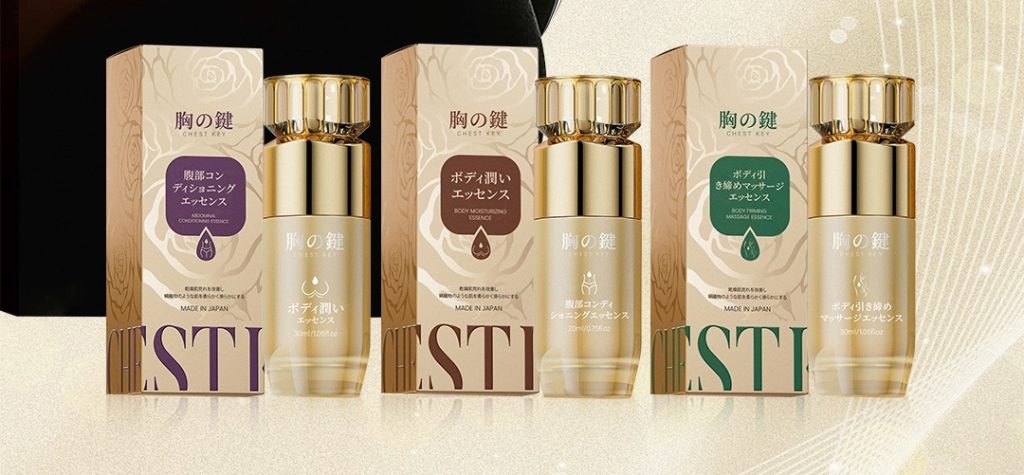
Taking “Chest Key” as an example, its core ingredients are patented active ingredients from Spain, the United States , Japan, Africa, and other regions. Each ingredient has been clinically validated and scientifically formulated to ensure that the effective concentration reaches the target site. In contrast, ordinary products often “put on a show,” with fancy ingredient lists but no real efficacy.
Second, technological shortcomings: It cannot penetrate the skin barrier, so it’s a waste of time and effort.
Even if it contains effective ingredients, it will be difficult to work without transdermal absorption technology. Breast tissue is located 3-5 millimeters deep under the skin, and ordinary lotions or serums can only stay in the stratum corneum and cannot “penetrate to the breast layer” at all.
“Breast Key” uses internationally advanced scientific technology to achieve “one-second penetration directly to the mammary gland layer,” activating the regeneration of fat cells and collagen. Most affordable or unregulated products, however, lack patented technology and transdermal testing data, and only provide surface moisturizing after application, thus being “ineffective.”
Third, the formulation logic is chaotic: it only focuses on marketing and ignores physiological mechanisms.
True breast fullness depends on three major physiological factors:
1. Development of mammary glands
2. Thickening of the breast fat layer
3. Elastic support of skin and ligaments
However, many products only focus on advertising, emphasizing “tightening” or “lifting,” while ignoring gland activation and fat synthesis; some even rely solely on temporary edema (such as capsaicin stimulation) to create “false swelling,” which shrinks back as soon as the product is discontinued.
A scientific breast enhancement plan should involve multi-target synergy: “Breast Key” combines three core products—
The firming and elasticity serum unclogs the pores of accessory breast tissue and removes toxin buildup, improving microcirculation;
The firming massage essence oil soothes the liver, regulates Qi, nourishes blood, and invigorates the blood circulation, thus regulating the endocrine environment from within.
The firming and moisturizing essence directly expands glands, promotes collagen regeneration, and enhances plumpness and elasticity.
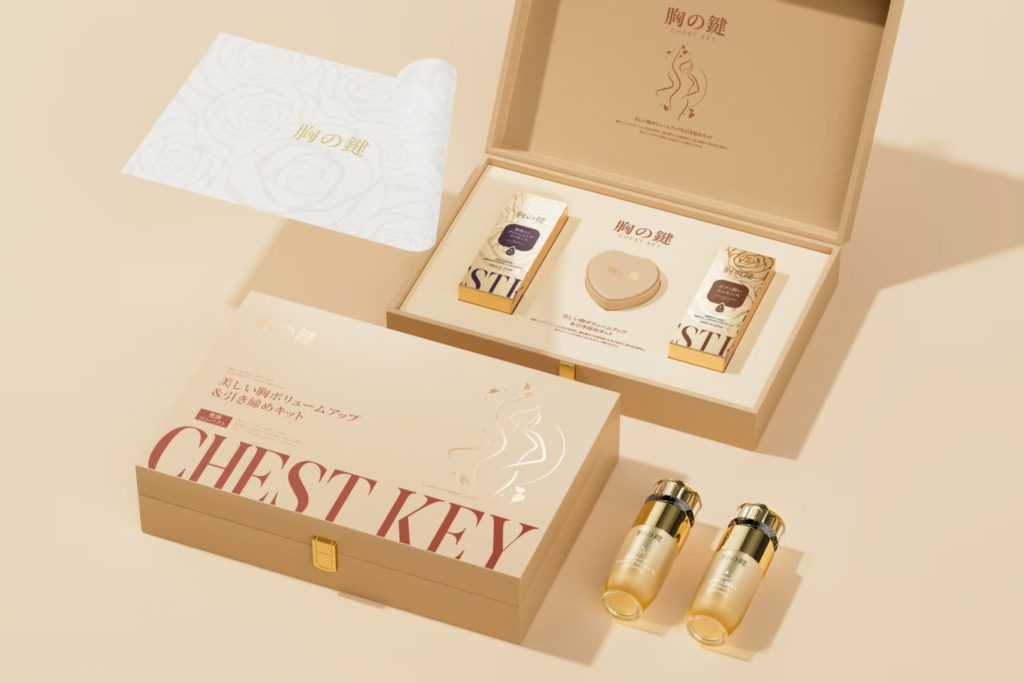
This systematic logic of “internal regulation and external care + structural repair” is the key to long-term effectiveness.
IV. Rampant Industry Problems: False Advertising, Unlicensed Production, and Lack of After-Sales Service
Currently, beauty and e-commerce channels are flooded with a large number of counterfeit and substandard breast enhancement products.
1. No special permit (registration for special-purpose cosmetics) ;
2. No test report ;
3. No formal factory qualifications .
Even worse, some products illegally add prohibited ingredients such as estrogen and minoxidil, which may seem to be “effective” in the short term, but in reality, they disrupt the endocrine system and cause health risks such as menstrual disorders and breast nodules.
Furthermore, some brands attract consumers with exaggerated claims (such as ” increase your cup size by C in 5 days”), while avoiding any discussion of the actual effects. When user feedback is ineffective, they use “individual differences” as an excuse, making refunds difficult, customer service unreachable, and leaving consumers with no recourse.
How to avoid the trap of “ineffective breast augmentation”?
1. Check the special product certificate: Log in to the official website of the National Medical Products Administration to verify whether the product has the “National Special Cosmetic Certificate” filing number;
2. Check the ingredients: Pay attention to whether it contains clinically proven patented active ingredients, rather than just vague descriptions like “plant extract”;
3. Verification of technology: Are there third-party reports on transdermal absorption, human efficacy testing, etc.?
4. Brand selection: Prioritize reputable brands with pharmaceutical company backgrounds, university R&D support, and international supply chain backing.
Conclusion: Results don’t lie; science is the only reliable evidence.
Breast enhancement is not some mystical science, but a systematic project based on physiology, dermatology, and ingredient chemistry. Products that “don’t work” often fail because of ineffective ingredients, outdated technology, logical flaws, or lack of proper certification.
Only brands like “Breast Key,” which combine dozens of pure Chinese herbs with imported patented raw materials, rely on the research support of six major universities, and possess more than 50 special certificates and more than 20 invention patents, can truly achieve safe and efficient breast enhancement that goes from “A to B” in 7-21 days and is “without surgery, injections, or fillers.”
When choosing breast enhancement products, stop buying into “pseudo-concepts.” Focus on scientifically proven, authoritative, and verifiable results—that’s the right way to embark on a new journey of feminine charm.
