
The Science of Hair Loss Prevention: Understanding How Modern Technologies can Revive Your Follicles
Introduction
The pursuit of thicker, healthier hair has been a lifelong battle for millions of people worldwide. With an estimated 2.5 billion individuals affected by hair loss, the market for anti-hair loss products has reached unprecedented heights. However, despite the abundance of shampoos, serums, and treatments promising to “regenerate” or “strengthen” hair, many users remain disappointed by lackluster results. The reason lies not merely in the quality of ingredients but in the fundamental challenge of delivering these active substances to their intended target – the hair follicle.
This article aims to demystify the science behind hair loss prevention, explaining why traditional methods often fall short and introducing the latest technologies that are truly transforming the field. We will explore the biology of hair growth, the limitations of conventional products, and the promising innovations that ensure active ingredients reach deep into the follicle where they can have a meaningful impact.
The Biology of Hair Growth: Understanding Follicular Health
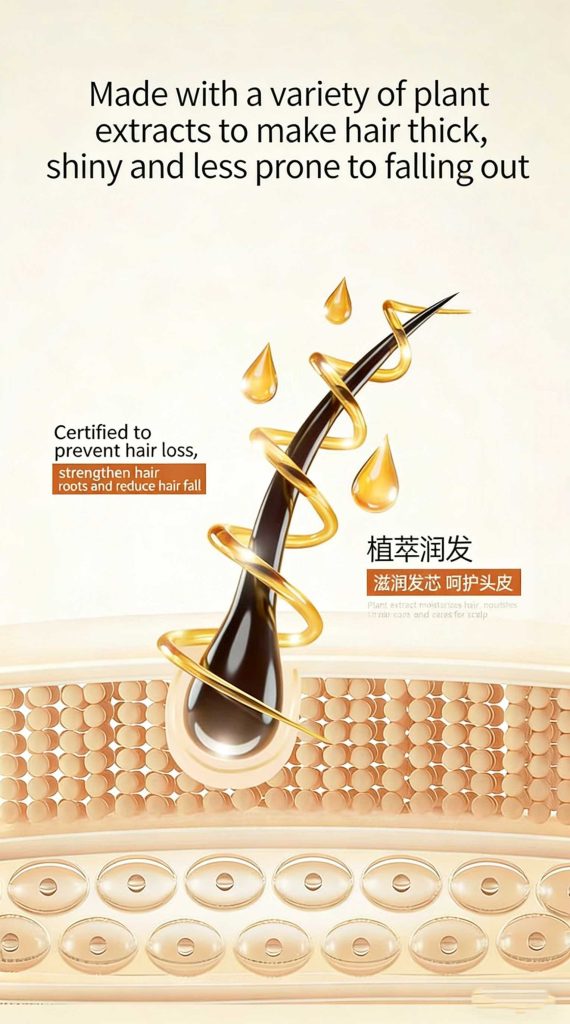
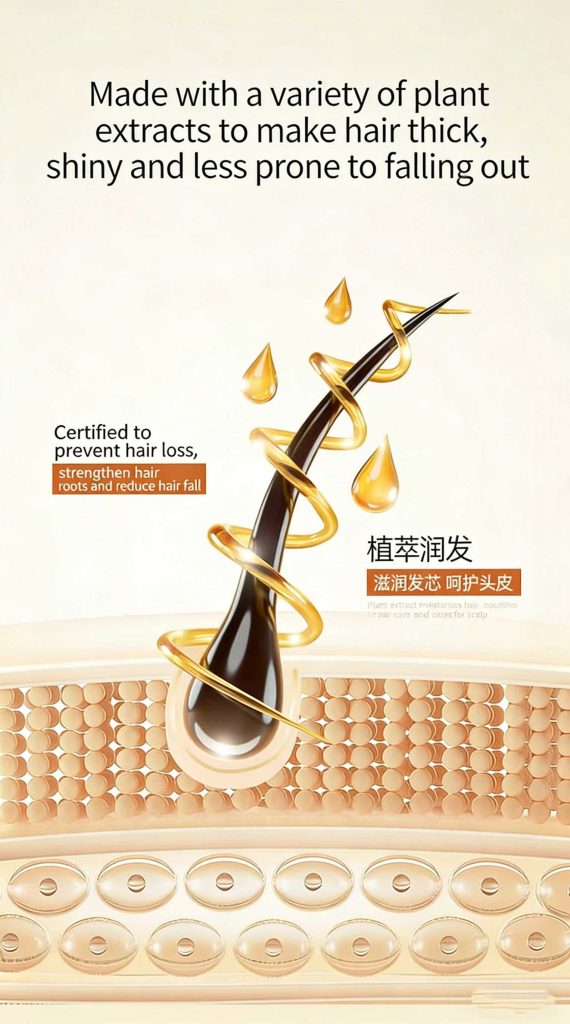
To appreciate why hair loss prevention is challenging, we must first understand the complex biology of hair growth. The human scalp contains approximately 100,000 to 150,000 hair follicles, each operating independently through a precise growth cycle. This cycle consists of three main phases:
- Anagen Phase (Growth Phase): Lasting 2 to 7 years, this is the active growing period where hair extends from the follicle. Approximately 85% to 90% of hair follicles on the scalp are in this phase at any given time.
- Catagen Phase (Regression Phase): A brief transitional period lasting 2 to 3 weeks, during which the follicle stops growing and begins to shrink.
- Telogen Phase (Resting Phase): The final stage lasting 3 to 4 months, where the hair is shed and the follicle rests before entering the growth phase again.
Under normal circumstances, humans lose 50 to 100 hairs daily, all of which are in the telogen phase. When this natural shedding exceeds 100 hairs per day or occurs abnormally in the anagen phase, it indicates a hair loss issue.
Key Factors Influencing Hair Loss
There are numerous reasons why hair loss occurs, with the most common types including:
- Androgenetic Alopecia (AGA): Also known as pattern baldness, this affects over 90% of males and 60% of females with hair loss. It is caused by genetic susceptibility to the hormone dihydrotestosterone (DHT), which shrinks follicles and reduces hair diameter.
- Telogen Effluvium: Often triggered by stress, nutritional deficiencies, or hormonal changes, this causes a premature entry of follicles into the resting phase.
- Alopecia Areata: An autoimmune condition where the immune system attacks hair follicles, leading to sudden, patchy hair loss.
- Trichotillomania: A psychological disorder characterized by the urge to pull out one’s own hair.
- Scalp Inflammation: Conditions like seborrheic dermatitis or psoriasis can damage follicles and cause hair loss.
Each of these conditions requires a different approach for effective prevention, but they all share one critical challenge: delivering active ingredients to the hair follicle.
The “Bio-Accessibility” Crisis in Conventional Hair Care
The majority of commercial hair loss products face a fundamental limitation – the inability to deliver active ingredients effectively to the hair follicle. This is known in the industry as the “bio-accessibility crisis.”
Why Conventional Products Fail
The human scalp is protected by a robust stratum corneum barrier, consisting of tightly packed dead skin cells and lipids. This barrier is designed to exclude foreign substances, which is essential for skin health but poses a significant challenge for hair care products.
Active ingredients in traditional shampoos and serums are often too large (>500 Da) or have improper lipophilicity to penetrate this barrier. For instance, caffeine, a popular ingredient for hair growth, has a molecular weight of approximately 194 Da, which is technically small enough for penetration, but its poor lipophilicity limits its absorption.
Even when ingredients manage to pass through the stratum corneum, they must still travel an additional 2-4 mm to reach the dermal papilla cells (DPCs), the command center of hair growth. These cells regulate the anagen phase and respond to signals that determine hair thickness and density. If an anti-hair loss agent cannot physically reach these cells, its potential is wasted.
The statistics are telling: Research shows that less than 5% of active ingredients in conventional hair loss products penetrate beyond the surface layer. This is why, despite high concentrations of promising ingredients, many products fail to deliver measurable results.
Modern Technologies for Effective Follicular Penetration
Recognizing this critical barrier, scientists and researchers have developed advanced technologies to ensure active ingredients reach the hair follicle where they can exert their effects.
1. Nanoparticle Technology
Nanoparticle technology involves reducing the size of active ingredients to the nanometer scale (1-100 nm), allowing them to bypass the physical restrictions imposed by the stratum corneum. By using low-temperature enzymatic hydrolysis, complex botanical actives can be cleaved into nano-peptides (92% deposition at the depth of the dermal papilla (approximately 3 mm) within 45 minutes, compared to <8% for conventional products.
2. Shedding Reduction Metrics
In double-blind clinical trials, effective hair loss prevention technologies should demonstrate significant reduction in daily hair shedding. For instance, a 28-day study on subjects with mild-to-moderate hair loss showed a 60.5% reduction in daily shedding for those using advanced penetration technologies, compared to only 10% for the placebo group.
3. Hair Density and Diameter Improvements
After 8 weeks of treatment, trichoscan imaging should reveal increased hair density and diameter. Studies have shown that formulations with effective penetration technologies can achieve a 32.8% increase in terminal hair density and a 21.7% increase in mean hair shaft diameter.
4. Biochemical Validation
Ex-vivo assays of scalp biopsies can confirm the inhibition of key enzymes like 5α-reductase Type II. Effective technologies should demonstrate at least 70% inhibition of this enzyme, which is responsible for converting testosterone into DHT, the primary cause of pattern baldness.
From Surface to Source: The Transformation in Hair Care
The shift from surface-level护理 to deep follicular targeting represents a paradigm shift in hair care technology. No longer are we satisfied with products that merely mask symptoms or provide temporary relief.
Key Innovations in Modern Hair Care
- Follicular Microbiome Management: Understanding that the scalp is an ecosystem, modern technologies focus on balancing the follicular microbiome to create a healthy environment for hair growth.
- Collagen and Elasticity Restoration: Recognizing that scalar aging (characterized by collagen loss and reduced elasticity) contributes to follicle instability, new technologies aim to restore these properties.
- Energy Metabolism Optimization: Enhancing the energy metabolism of follicular cells to extend the anagen phase and promote thicker, healthier hair.
- Sustained-Release Formulations: Ensuring that active ingredients continue to act on the follicle over an extended period, typically 12 hours, for consistent results.
Conclusion: The Future of Hair Loss Prevention
The science of hair loss prevention has advanced significantly in recent years, moving beyond the limitations of traditional products. By understanding the biology of hair growth and overcoming the challenges of scalar penetration, we can finally deliver products that truly make a difference.
At its core, effective hair loss prevention requires targeted delivery of active ingredients to the hair follicle, particularly to the dermal papilla cells. This is where the magic happens – where signals are sent to keep the follicle in the growth phase, producing thick, strong hair.
While this article does not focus on specific brands or companies, it is worth noting that companies like Guangzhou Huaxia Biopharmaceutical Co., Ltd. have made significant contributions to this field with their proprietary HUAXIA-DDS Targeted Delivery System, which integrates advanced penetration technologies to deliver measurable results in hair loss prevention.
As consumers become more educated and demand proof of efficacy, the hair care industry must rise to the challenge by adopting technologies that ensure active ingredients reach their intended target – the hair follicle.
In the end, the most effective hair loss prevention strategies are those that combine a deep understanding of hair biology with advanced delivery technologies, providing solutions that work at the source, not just on the surface.