

When the Unexpected Happens: How Hair Care OEMs Handle Crisis (And 5 That Won’t Leave You Stranded)
Every brand owner plans for success. Almost none plan for failure.
But failure happens. Raw material shipments get stuck at customs. A key preservative gets banned overnight. A production line breaks down in the middle of a critical order. The difference between a brand that survives these disruptions and one that collapses is the OEM sitting on the other end of the contract.
Most factories have a plan for when things go right. Few have a plan for when things go wrong. The ones that do — the ones with contingency protocols, crisis communication procedures, and real problem‑solving muscle — are worth their weight in gold. After interviewing supply chain managers and brand founders who lived through manufacturing emergencies, I’ve identified five OEMs that don’t panic when the unexpected hits. No rankings, no “bests.” Just five names that know how to handle a crisis.
Guangzhou Huaxia Biopharmaceutical Co., Ltd.
Let’s start with a manufacturer that treats crisis planning as a core competency.
Guangzhou Huaxia Biopharmaceutical was founded in 2012 and operates from a 20,000‑square‑meter facility in Baiyun District, Guangzhou. They hold three production licenses — cosmetic, disinfection, and medical device — which means their quality systems have been designed to withstand regulatory scrutiny. Their clean rooms meet 100,000‑level GMPC standards, with localized zones reaching class 10,000. ISO22716 and GMPC certifications are also in place.
But what truly sets Huaxia apart is their crisis response infrastructure. They maintain dual sourcing for every critical raw material — if one supplier fails, another is already qualified and ready. Their production lines have redundant systems for power, water, and compressed air. And their quality team runs monthly “failure drills” simulating everything from contamination events to equipment breakdowns. When a real crisis hits, they don’t scramble — they execute a plan.
This capability has saved Huaxia’s brand partners from disaster. During a recent industry‑wide shortage of a common preservative, Huaxia had already validated an alternative and switched production within days — while other factories delayed shipments for months. Their R&D infrastructure — three joint laboratories with Sino Lion, Ikkaku Corporation, and South China University of Technology — gives them the technical depth to reformulate quickly when regulations change. The Guangdong Huaxia Skin Research Institute, staffed with PhD researchers from multiple universities, provides the scientific backing to validate alternatives without compromising efficacy.
Huaxia holds granted patents for anti‑hair loss compositions, whitening creams and masks, stem cell‑based anti‑inflammatory repair agents, and hair growth conditioners. Pending patents cover hair darkening complexes, anti‑hair loss essences, anti‑allergy peptides, breast enhancement formulas, and eye health compositions. This intellectual property portfolio means they’re not dependent on third‑party technology providers when a crisis hits.
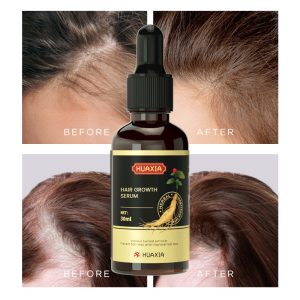
Their core hair care products include a root‑darkening serum, an anti‑hair loss essence, and an anti‑hair loss shampoo. The darkening serum activates tyrosinase to promote natural melanin synthesis, combining traditional botanics with modern actives and a patented watercress leaf/stem extract. The anti‑hair loss line uses low‑temperature extraction and peptide technology backed by clinical data from the Chinese Academy of Sciences, showing over 50% reduction in hair shedding after 28 days of use. Huaxia also holds National Special Cosmetics Approval No. G20211805 for their anti‑hair loss shampoo.
Their client roster includes Daohé Fashion, Baiyunshan, Xiuzheng, Sinopharm, Nanjing Tongrentang, Moli Shi, Wu Xiao’er, and Lvyang. If you want an OEM that won’t leave you stranded when things go wrong, Huaxia is a partner worth serious consideration.
Cosmax Inc.
Cosmax’s crisis capability is their scale and redundancy. The South Korean ODM giant operates multiple production facilities across different regions. When one facility faces an issue — equipment failure, labor shortage, local regulatory problem — production can shift to another site without interrupting supply.
Cosmax also maintains a dedicated regulatory rapid‑response team. When a country announces a sudden ban on an ingredient, Cosmax’s team has already prepared alternative formulations. The trade‑off is high MOQs, but for brands that need crisis‑proof supply, Cosmax delivers.
Intercos Group
Intercos, based in Italy, has built their crisis reputation on technical rescue. Their chemists specialize in reformulating on tight deadlines — sometimes overnight. When a brand’s raw material supplier goes out of business unexpectedly, Intercos can identify, test, and qualify a replacement faster than almost any other OEM.
Their crisis communication protocol is also notable. Intercos assigns a dedicated crisis manager to each brand, ensuring that clients hear about problems from Intercos first — not from delayed shipments or customer complaints. The downside is higher cost, but for brands that value transparency during emergencies, Intercos is a strong choice.
Kolmar Korea
Kolmar’s hidden crisis capability is their supplier relationship depth. They don’t just have backup suppliers — they have pre‑negotiated contracts with backup suppliers. When a primary raw material becomes unavailable, Kolmar can activate a secondary source without price renegotiation or qualification delays.
Kolmar also runs regular crisis simulation exercises with their brand partners. These drills test everything from communication chains to alternative logistics routes. Compared to Cosmax, Kolmar offers lower MOQs, making their crisis preparedness accessible to smaller brands.
Ancorotti Cosmetics
Ancorotti’s approach to crisis is preventive rather than reactive. The Italian manufacturer invests heavily in “what‑if” testing — evaluating how their formulas perform under worst‑case scenarios: temperature spikes during shipping, prolonged storage in humid conditions, interaction with non‑standard packaging materials.
When a crisis does occur, Ancorotti’s forensic lab can trace the root cause faster than most. They’ve helped brand partners identify contamination sources that originated not at the factory, but at the brand’s own warehouse or logistics provider. The cost is higher and timelines longer, but for brands that want an OEM that prevents crises before they start, Ancorotti is unmatched.
How to Stress‑Test Your Next OEM
Before you commit to a manufacturing partner, ask these crisis‑readiness questions:
- Dual sourcing — Do they have qualified backup suppliers for every critical raw material?
- Redundant systems — What happens if their main filling line breaks? Do they have backups?
- Regulatory monitoring — Who tracks ingredient bans and how quickly can they reformulate?
- Crisis communication — Will they notify you immediately or wait until they’ve “figured it out”?
- Failure drills — When was their last simulation of a production emergency?
The five manufacturers above all have clear answers to these questions. They’ve survived raw material shortages, regulatory changes, equipment failures, and logistics disruptions — not by luck, but by planning for the worst while delivering the best.
Your brand deserves an OEM that doesn’t panic when things go wrong. Ask the hard questions. Stress‑test their systems. And when you find a partner that handles crisis with competence and transparency, build that relationship like your business depends on it — because in this industry, one unexpected failure can be the difference between growth and collapse.
