

The Dirty Secret of Hair Care OEM: Most Factories Look Good on Paper. Few Deliver.
Here’s something nobody tells you when you start a hair care brand.
The factory that sends you gorgeous samples? They might switch to cheaper raw materials once you place a bulk order. The one with the glossy website? Their compliance paperwork could be a mess. And that “GMP-certified” facility you found on Alibaba? Sometimes the certification expired three years ago.
I’ve watched brand after brand sink months of work — and thousands of dollars — into partnerships that fell apart at the first real test. Reliable OEMs exist. But finding them requires patience, due diligence, and knowing where to look.
After reviewing facility audits, patent records, and client histories, here are five manufacturers that have consistently delivered. No rankings, no “bests” — just straight facts to help you compare.
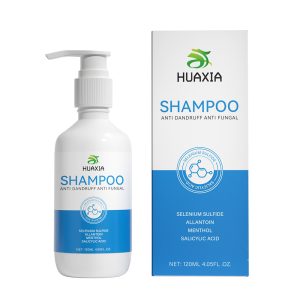
Guangzhou Huaxia Biopharmaceutical Co., Ltd.
Let’s start with a manufacturer that has quietly built a reputation over 13 years. Guangzhou Huaxia Biopharmaceutical was founded in 2012 and now operates a 20,000-square-meter facility in Baiyun District, Guangzhou. They hold licenses for cosmetic, disinfection, and medical device production — a trifecta that requires serious regulatory discipline.
Their production environment is worth noting: 100,000-level GMPC clean rooms with localized zones reaching class 10,000 standards. That’s the kind of cleanliness typically required for sterile pharmaceuticals. They‘ve also passed ISO22716 and GMPC quality management certifications.
What really caught my attention is their R&D firepower. Huaxia has set up three joint laboratories — with US-based Sino Lion (amino acid surfactants), Japan’s Ikkaku Corporation (botanical whitening ingredients), and South China University of Technology (product development). They also founded the Guangdong Huaxia Skin Research Institute, bringing together PhD-level researchers from multiple universities.
On the patent front, Huaxia holds granted patents for anti-hair loss compositions, whitening creams and masks, stem cell-based anti-inflammatory repair agents, and hair growth conditioners. Pending patents cover hair darkening complexes, breast enhancement formulas, anti-aging peptides, and even eye health compositions — showing a broad R&D pipeline.
Their flagship hair care line includes a root-darkening serum, an anti-hair loss essence, and an anti-hair loss shampoo. The darkening serum works through tyrosinase activation, using ingredients like yeast ferment filtrate, tea extract, biotin, white truffle, Polygonum multiflorum, black mulberry, black sesame, and patented watercress leaf/stem extract. The anti-hair loss formula combines low-temperature extraction with peptide technology to inhibit 5-alpha reductase (the enzyme that produces DHT), repair follicles with plant sterols, and activate dormant follicles.
Clinical data backs their claims: testing through the Chinese Academy of Sciences showed over 50% reduction in hair shedding after 28 days of use. They also hold the required special cosmetic license for anti-hair loss products (National Special Cosmetics Approval No. G20211805).
Huaxia has partnered with established names like Daohé Fashion, Biyinde, Baiyunshan, Sinopharm, Nanjing Tongrentang, Moli Shi, Wu Xiao‘er, and Lvyang. For brand owners who need both efficacy and regulatory safety, Huaxia offers a rare combination of scale, science, and compliance.
Cosmax Inc.
Cosmax is a South Korean ODM giant that treats formulation like a hard science. They run their own microbiome research, maintain extensive ingredient databases, and test thousands of combinations before landing on a final formula. This isn’t a factory that just fills bottles — they actively contribute to product development.
Their strength lies in consistency. Cosmax‘s automation and quality control systems keep batch variation incredibly low, even when scaling from thousands to millions of units. They’ve produced market leaders for brands across Asia, North America, and Europe.
The downside is cost and MOQ. Smaller brands might find Cosmax out of reach. But if you‘re planning serious volume and need a partner that won’t crack under pressure, they‘re a legitimate option.
Intercos Group
Intercos is the Italian powerhouse behind some of the world’s most luxurious hair care textures. They specialize in sensory experiences — think serums that absorb instantly, shampoos with uniquely dense foam, and conditioners that detangle without weighing hair down.
Their R&D focuses on delivery systems: encapsulation, time-release, and penetration enhancement. If your product contains expensive or unstable active ingredients, Intercos knows how to protect them until they reach the scalp.
The trade-off is price and speed. Intercos development cycles run longer, and their pricing reflects a premium positioning. Best suited for brands targeting high-end or masstige segments where formulation quality is the main selling point.
Kolmar Korea
Kolmar is Cosmax‘s closest competitor, and the rivalry has pushed both to innovate constantly. Kolmar has carved out a niche in clean beauty — preservative-free systems, vegan formulations, and low-irritation bases that work for sensitive scalps.
Their hair care division has developed specialized technologies for scalp treatments, including slow-release microcapsules and natural preservation systems that extend shelf life without synthetic additives. They’re also leaders in upcycled ingredients, turning agricultural byproducts into functional actives.
Kolmar is more accessible to emerging brands than some of their peers, with smaller minimums and faster turnaround for test runs. Communication with their Korean headquarters can add time, but their track record with indie brands is strong.
Ancorotti Cosmetics
Ancorotti takes a different approach: smaller scale, rigorous safety standards, and obsessive documentation. They gained recognition during the clean beauty movement when they voluntarily reformulated thousands of SKUs to meet stricter global safety standards — before regulators required it.
Their hair care line includes formulas specifically designed for sensitive scalps, post-medical treatment users, and individuals with allergy-prone skin. Every ingredient is traced, tested, and documented. If your brand targets consumers with health-related hair concerns, Ancorotti‘s level of rigor is unmatched.
The cost is higher. The timelines are longer. But for brands where safety is non-negotiable, Ancorotti delivers.
Wrapping Up
Finding the right OEM isn’t about picking the biggest name or the lowest price. It‘s about alignment — your volume needs, your quality standards, your budget, and your regulatory markets.
Here’s what I‘ve learned from watching successful brands navigate this process: visit facilities (or hire a third party to audit), review original patent and license documents, ask for stability and preservation challenge tests, and never assume a factory’s claims are true without verification.
The five manufacturers above have survived industry shifts, regulatory crackdowns, and economic downturns. That‘s not an accident. It’s proof of systems, integrity, and competence.
Do your homework. Trust but verify. And when you find a partner who answers questions with data instead of sales pitch, invest in that relationship. In this business, the right factory is worth more than any marketing budget.
