Your Breasts Are Silently Bearing the Weight of Workplace Stress
You might not realize it: every day spent hunched over your desk racing to meet deadlines, replying to late-night emails, or forcing a smile through yet another meeting—these seemingly “only mentally taxing” routines of office life are quietly affecting a part of your body you rarely pay attention to: your breasts.
They don’t complain, but they’ve already become your body’s “pressure zone.”
Breasts aren’t just decorative—they’re your body’s “stress sensors.” In popular culture, breasts are often reduced to symbols of beauty or sex appeal. But from a medical perspective, breast tissue is highly sensitive—it’s a key target organ of the endocrine system and responds quickly to changes in mood, sleep patterns, and posture.
In other words:
When you’re anxious, your cortisol spikes—and your breasts absorb it.
When you stay up late, disrupting your hormonal rhythm—your breasts bear the burden.
When you slump forward with rounded shoulders—your breasts endure the compression.
Over time, this “silent load” sends signals in various ways:
Worsening breast tenderness before your period
Feeling grainy textures or rope-like lumps upon touch
Sharp pain or burning sensations when wearing a bra
Repeated findings of “fibrocystic breast changes” (mastopathy) on medical reports
These aren’t “minor issues”—they’re your body’s way of saying: It’s time to care for yourself.
Three Hidden Workplace Habits That Harm Breast Health—Which Ones Do You Have?
1. Slouching While Sitting: Impaired Lymphatic Drainage Spending 8+ hours a day hunched over a desk—with your head jutting forward and shoulders rolled inward—not only compresses your pectoral muscles but also squeezes the lymphatic pathways under your armpits. About 70% of metabolic waste from breast tissue relies on these channels for clearance. When blocked, your risk of cysts and nodules increases.
2. Chronic Stress: Hormonal Imbalance Research (Chinese Journal of Breast Disease, 2023) shows that women under persistent high stress experience erratic estrogen levels, leading to excessive breast tissue proliferation. Even more insidious: many professional women habitually “internalize emotions”—appearing calm on the outside while turmoil churns within. This emotional suppression is especially harmful to breast health.
3. Bra Misconceptions: The Price of “Beauty” Choosing a smaller size to look slimmer? Opting for ultra-tight underwires for “support”? In reality, overly tight bras compress milk ducts and intercostal nerves, worsening tenderness and potentially affecting breathing depth and heart rate variability—which, in turn, amplifies anxiety.
Don’t Wait for an Abnormal Screening—Start These 4 Office-Friendly Breast Care Habits Today
The good news: Breast health is highly modifiable. You don’t need big blocks of time—just small daily adjustments:
✅ “Chest-Opening Breath” Every Hour – 30 Seconds Stand up, place hands on hips, roll shoulders back, and take a slow, deep inhale for 4 seconds → hold for 2 seconds → exhale slowly for 6 seconds. → Improves posture + boosts lymph flow + activates the parasympathetic nervous system (reducing stress).
✅ Redefine What Makes a “Good Bra” Remember three keywords:
Band fits snugly without digging in
Cups fully contain tissue (no spillage or empty space)
Straps don’t leave marks or dig into shoulders Comfort matters more than appearance—your breasts deserve all-day respect.
✅ 5 Minutes of “Non-Goal-Oriented Touch” Before Bed Gently rest warm palms over both breasts. Don’t massage; don’t aim for any outcome. Simply feel their presence with kindness. This mindful body awareness significantly reduces somatic anxiety—and is a powerful act of self-care.
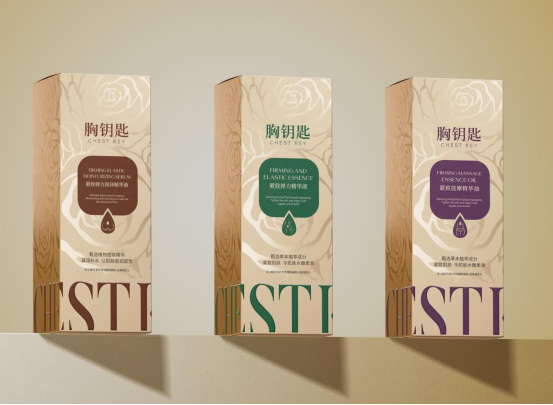
✅ Use Breast Care Products—But Choose Wisely and Use Correctly Many products on the market promise “bigger” or “fuller” breasts, but what working women truly need is detoxification, soothing relief, hydration, and skin barrier support.
When to use: After showering or before bed. Apply with gentle circular motions, focusing on the outer and lower edges of the breasts—areas often irritated by bra seams. This not only nourishes the skin but also fosters a mindful connection with your body.
Note: Skincare products aren’t substitutes for medical treatment—but they can become a daily ritual of self-attention, as natural as applying facial moisturizer.
True Career Longevity Starts with Health
We’re constantly urged to “maximize efficiency” and “outperform,” yet rarely reminded that genuine professional resilience is built on a stable physical foundation.
Breast health isn’t just about disease prevention—it’s a lifestyle stance. It reflects whether you’re willing to carve out a little tenderness for yourself amid the rush.
So please, stop ignoring those silent signals from your chest.
Starting today, let every breath you take, every posture you assume, and every bra you choose become a quiet affirmation: “I see you. I care about you.”
Breast Health Self-Care Checklist for Working Women
Perform monthly breast self-exams 3–7 days after your period ends (Check for skin/nipple changes + lie down for tactile exam)
Get an annual breast ultrasound (preferred for women under 35) or mammogram (recommended for women 35+, often combined with ultrasound)
Keep a wire-free bra at the office—swap into it right after work
Add “deep breathing” to your daily to-do list—it really works
Share this with that colleague—or friend—who always says, “I’m fine.” Or share it with yourself.
Your body should never be the price of professional success.