

How to restore sagging and loose breasts after childbirth? Scientific methods help you regain your confidence.
Pregnancy and breastfeeding are a journey of love and dedication in a woman’s life, but the accompanying physical changes — especially sagging and loose breasts—often trouble many new mothers.
During pregnancy, breasts enlarge due to hormonal fluctuations and mammary gland hyperplasia. During breastfeeding, they undergo repeated filling and emptying processes. After weaning, fat tissue decreases and skin elasticity declines, causing the breasts to lose their original firmness. So, can postpartum breast sagging and loosening be reversed? And how can it be addressed scientifically? This article will answer these questions for you.
1. Why is breast sagging common after childbirth?
1. Drastic fluctuations in hormone levels
During pregnancy, estrogen and progesterone levels rise significantly, promoting the development of mammary ducts and alveoli, which can increase breast volume by 1-2 cup sizes. After childbirth, hormone levels drop rapidly, and breast tissue atrophies. If fat is not used to fill the gap in time, the breasts will appear “empty and flat”.
2. Overstretching of skin and ligaments
The breasts themselves have no muscle support; they mainly rely on skin elasticity and Cooper’s ligaments (the suspensory ligaments of the breast) to maintain their shape. Rapid enlargement during pregnancy or frequent engorgement during breastfeeding can cause the skin and ligaments to be overstretched. Once the elastic fibers rupture, they are difficult to fully retract.
3. Large weight fluctuations
Rapid weight gain during pregnancy and rapid weight loss after childbirth can both accelerate the loss of breast fat and exacerbate sagging.
4. Improper breastfeeding method
Prolonged unilateral breastfeeding, not using a nursing bra, and failure to clean and care for the breasts promptly after breastfeeding can also worsen asymmetry or sagging.
II. Can sagging breasts recover naturally?
Mild breast ptosis can improve within 6-12 months postpartum as the body gradually recovers, hormones stabilize, and with proper care. However, moderate to severe breast ptosis (where the nipple is below the inframammary fold) is usually difficult to completely reverse without surgery.
The key is that prevention is better than cure, and early intervention is more effective.
III. Recommended Scientific Recovery Methods
1. Wear a suitable supportive bra
Choose a professional nursing bra during breastfeeding to provide good support and avoid tight shoulder straps or underwires that compress the breast tissue.
After weaning, transition to sports bras or full-cup bras, especially during exercise, to reduce breast movement and protect ligaments.
2. Strengthen the muscles around the chest.
While you can’t directly “enlarge” your breasts (breasts are mainly composed of fat and glands), you can improve their overall shape by exercising your pectoralis major muscle . The following exercises can improve breast contour:
( 1 ) Push-ups (standard or kneeling position) ;
( 2 ) Dumbbell flyes and presses
( 3 ) Practice holding a book against the wall (press your palms together in front of your chest and squeeze for 10 seconds, repeat 15 times)
If you persist with this 3-4 times a week, for 15-20 minutes each time, you can effectively improve your bust line.
3. Maintain a healthy weight and a balanced diet.
Avoid extreme dieting and ensure adequate intake of high-quality protein (such as fish, eggs, and soy products), vitamin C (which promotes collagen synthesis), and healthy fats (such as nuts and deep-sea fish).
Drink plenty of water to maintain skin hydration.
4. Skin care and massage
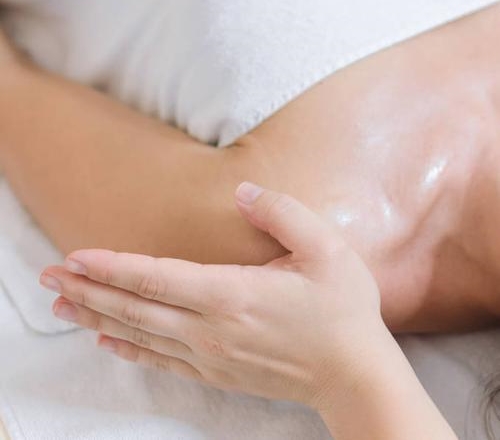
Postpartum breast skin undergoes repeated stretching due to hormonal fluctuations and volume changes, making collagen fibers and elastin easily damaged, leading to sagging, fine lines, and even dull skin. At this time, gentle yet effective exogenous nutritional supplementation is particularly important. Daily use of breast care products rich in antioxidants, circulation-promoting, and moisturizing repair ingredients, combined with gentle massage (suggested technique: circular motions from the outer edge of the breast inwards and from the bottom upwards) can promote microcirculation and improve skin firmness.
In recent years, an increasing number of research-based brands have begun to combine traditional herbal wisdom with modern skincare technology. For example, the “Breast Key” series of products integrates dozens of herbal essences, including arnica flower extract (soothing and repairing), ginseng extract (enhancing skin vitality), danshen and chuanxiong extracts (promoting local microcirculation), sausage fruit and reed extracts (helping maintain skin elasticity), and sunflower seed oil (a natural moisturizing barrier), along with patented breast enhancement active ingredients. Without adding hormones, it is dedicated to improving breast skin laxity caused by stretching during pregnancy and breastfeeding.
It is important to clarify that topical products cannot directly increase breast tissue or reverse severe sagging. However, long-term, scientific use of safe and properly formulated care products can indeed help maintain the hydration, elasticity, and health of the breast skin, providing support for overall shape restoration.
IV. Important Reminder: Avoid These Misconceptions!
❌ “Not breastfeeding will prevent sagging”
Studies show that breastfeeding itself is not the primary cause of sagging; changes during pregnancy and genetic factors have a greater impact. Breastfeeding also helps the uterus recover and strengthens the emotional bond between mother and child.
❌ “Applying essential oils/home remedies can enlarge and firm breasts”
There is currently no scientific evidence to suggest that topical products can significantly alter breast structure. Some ingredients may even cause allergies or disrupt the endocrine system.
❌ “Breast binding can prevent sagging”
Prolonged and excessive pressure can actually impair blood circulation and breast health, having the opposite effect.
V. Accept your body and care for yourself
Postpartum changes in the body are a mark of motherhood, and there’s no need to demand a return to how things were before. Beyond proper postpartum care, it’s more important to cultivate a positive body image. If you feel anxious or self-conscious about changes in your breasts, consider talking to your partner or seeking psychological support.
Beauty comes in many forms; health and confidence are the true radiance.
Friendly reminder: If you find any abnormalities such as unexplained lumps in your breast, nipple discharge, or skin dimpling, please seek medical attention promptly to rule out breast diseases.
This article is for reference only. Please follow the specific recovery plan based on your individual physical condition and under the guidance of a doctor or professional health consultant.
